
Myocarditis reports after vaccination and COVID-19

- データ元:
- 第73回厚生科学審議会予防接種・ワクチン分科会副反応検討部会 資料1-7―1 副反応疑い報告の状況について (2021/12/3)
- 第74回資料(2021/12/24)の心筋炎が第73回資料(2021/12/3)の心筋炎(心膜炎含む)報告より多い場合は、第74回資料の数値を利用
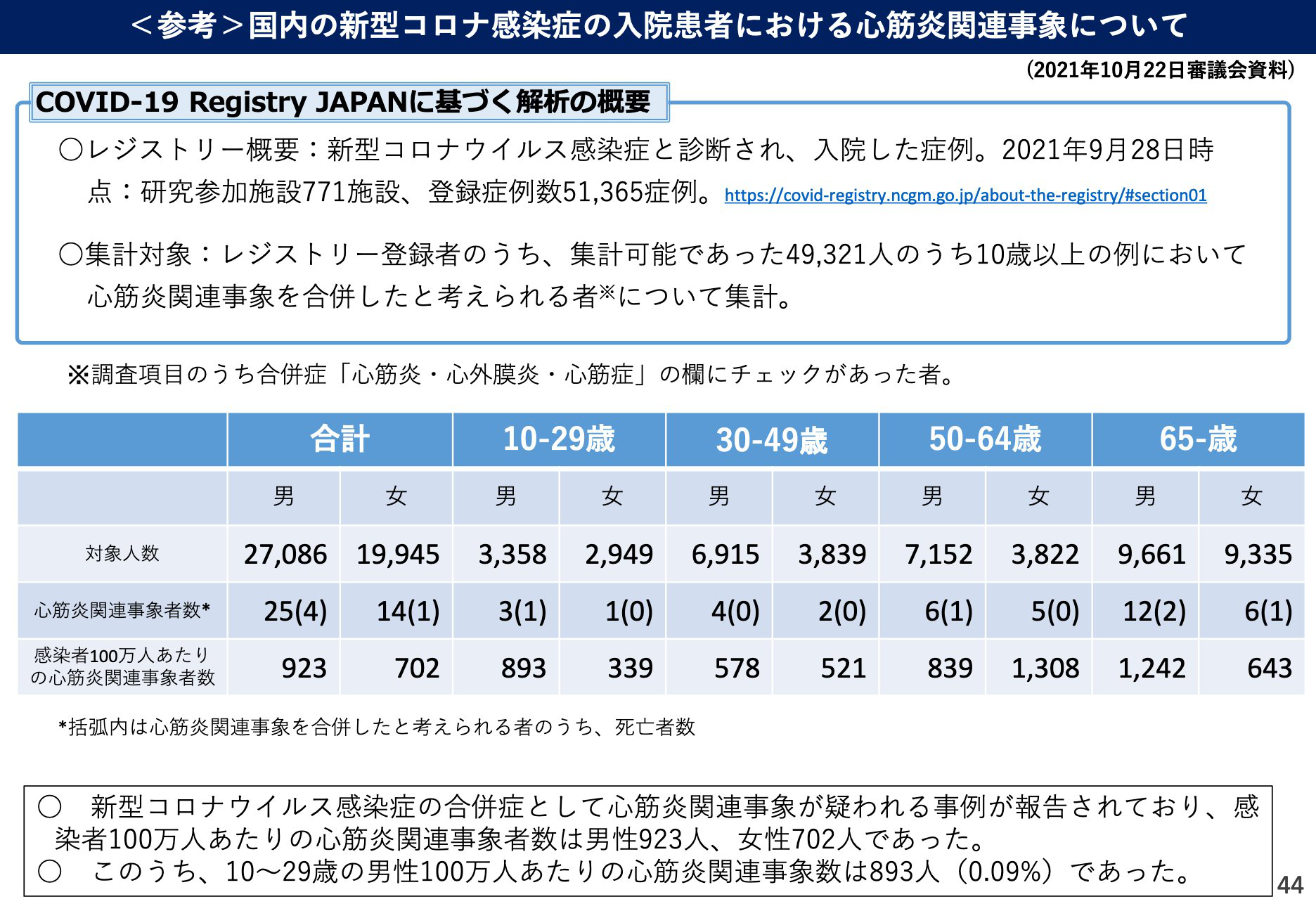
- 厚労省資料には10-29歳男性の新型コロナ「入院患者3358人中3人」の心筋炎をもって「100万人あたり893人」と書いてあるが、10-29歳の男性の陽性者は2021/12/3までで33万人、入院率は10%以下(※1)なので、推計29人以下。
- 同様に10-29歳女性の新型コロナ「入院患者2949人中1人」の心筋炎をもって「100万人あたり339人」と書いてあるが、10-29歳の女性の陽性者は全期間で27万人、入院率は10%以下(※1)なので、心筋炎の推計9人。
- 10-29歳男女ともワクチン後の心筋炎の方が多いと推計される。
- そもそもワクチンは健康な人に接種するのだから、比較できる桁になっていること自体がワクチン接種事業として疑問。
- Sources:
- 73rd meeting of the MHLW adverse-reaction review committee, Material 1-7-1 (December 3, 2021)
- When the 74th meeting material (December 24, 2021) reported more myocarditis cases than the 73rd meeting material (including pericarditis), the later figure was used.
- The MHLW material describes 3 myocarditis cases among 3,358 hospitalized male COVID-19 patients aged 10–29 as 893 per million. There were about 330,000 male positive cases in this age group through December 3, 2021, and the hospitalization rate was under 10% (Note 1), giving an estimate of no more than 29 cases.
- Likewise, it describes 1 case among 2,949 hospitalized female patients aged 10–29 as 339 per million. There were about 270,000 female positive cases in this age group and the hospitalization rate was under 10% (Note 1), giving an estimate of 9 cases.
- For both males and females aged 10–29, myocarditis after vaccination is estimated to be more frequent.
- Vaccines are administered to healthy people; the fact that the figures are even of a comparable order raises questions about the vaccination program.
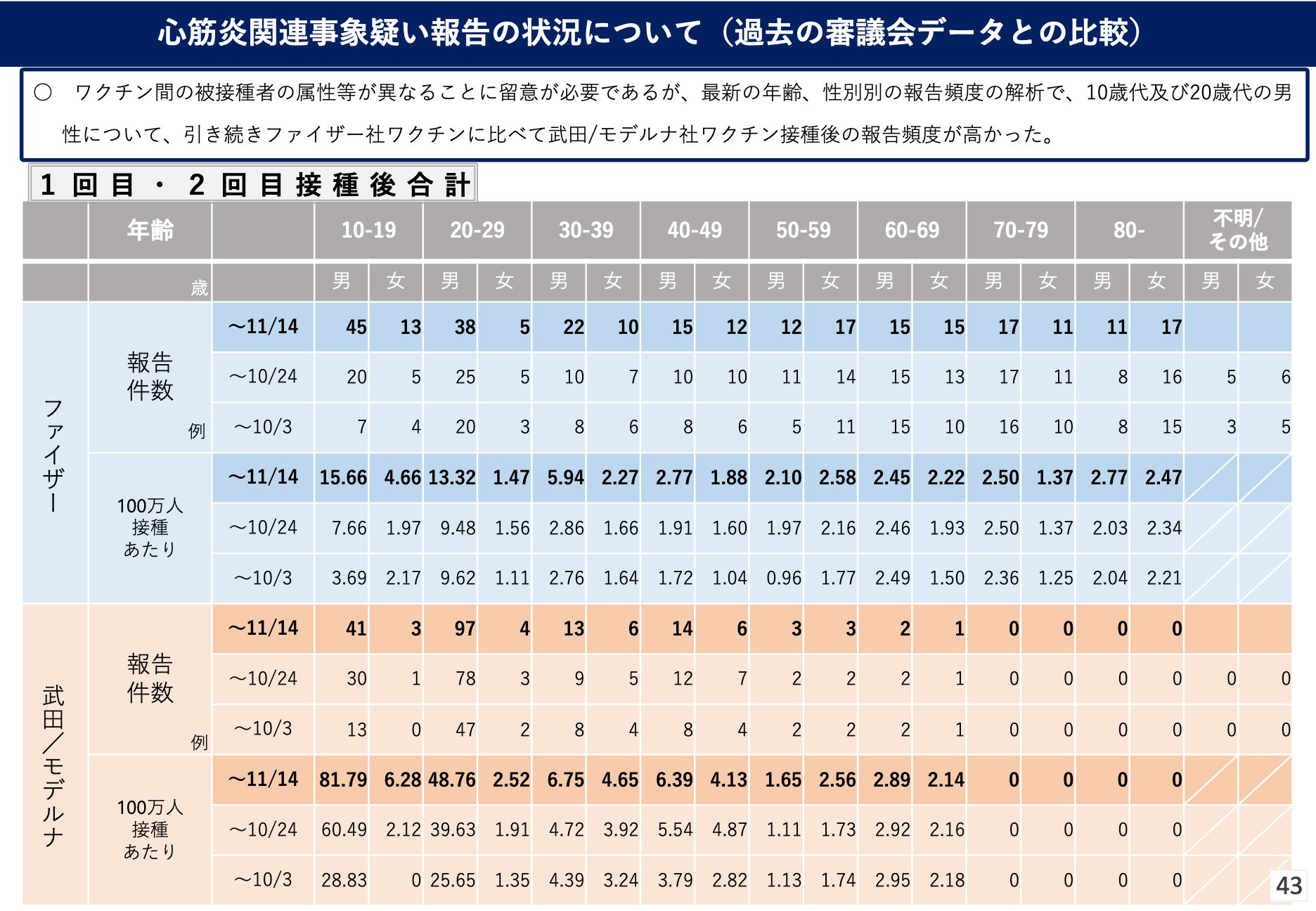
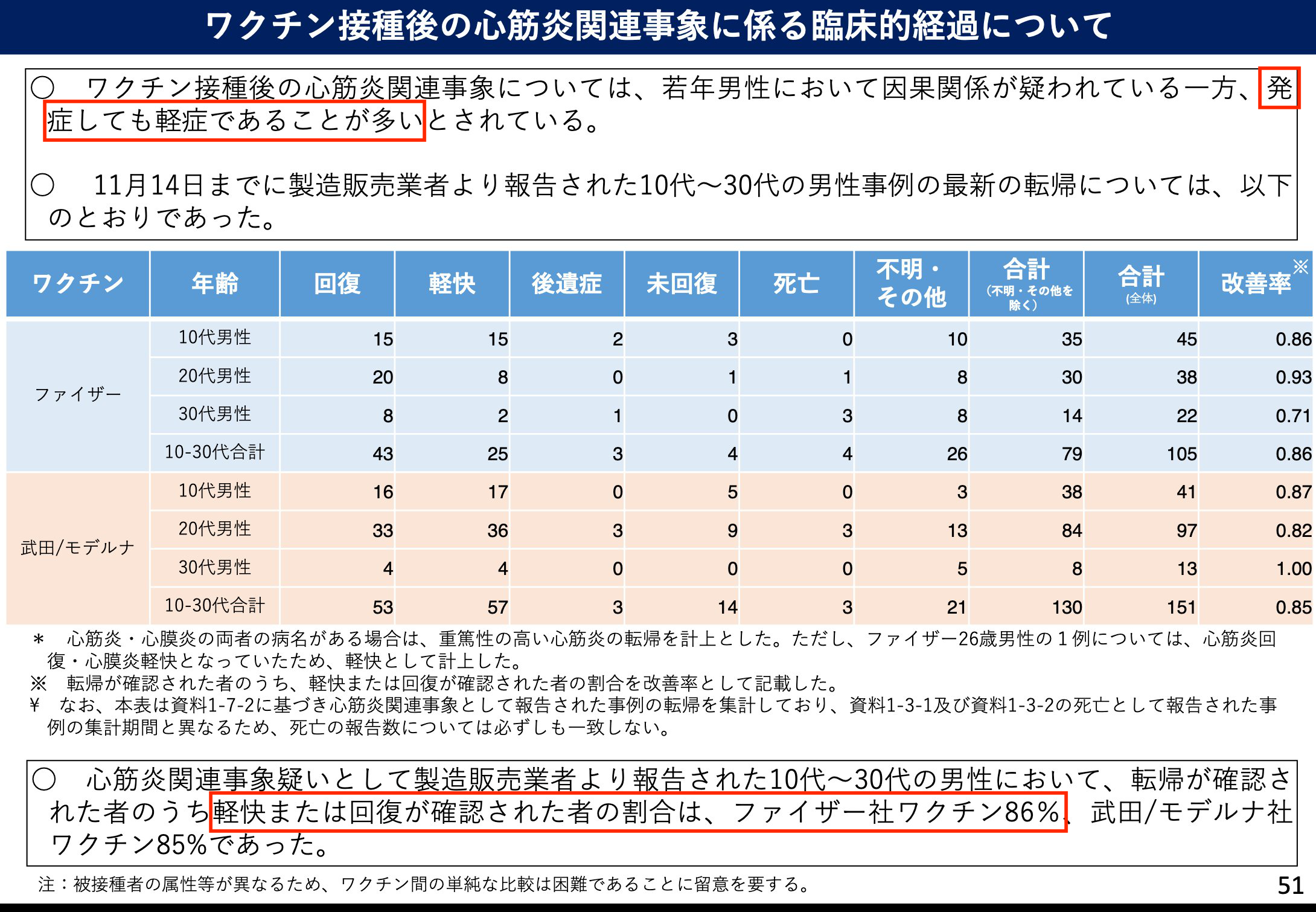
- 副反応疑い報告10代20代の心筋炎は7割重篤。
- 12/3の第73回ワクチン分科会副反応検討部会資料では、回復と軽快(症状が軽くなった)を併せ不明を除外して割合を算出し改善率8割以上と。
- 「だから多くは軽症」と重篤でも軽快すれば軽症というトンデモ理論が書いてある。
- About 70% of suspected myocarditis reports among teenagers and people in their twenties were classified as serious.
- The December 3 material combined “recovered” and “improving,” excluded unknown outcomes, and reported an improvement rate above 80%.
- It then argued that most cases were mild, treating a serious case as mild once it improved.

※1 第47回新型コロナウイルス感染症対策アドバイザリーボード(令和3年8月11日)資料3-3 西浦先生提出資料 124ページ
グラフの iframe 埋込みタグ: <iframe src="https://fujikawa.org/covid19/myocarditis-i.html" loading="lazy" style="width: 100%; height: 500px; border: 0px none;"></iframe>
Graph iframe embed code: <iframe src="https://fujikawa.org/covid19/myocarditis-i.html" loading="lazy" style="width: 100%; height: 500px; border: 0px none;"></iframe>